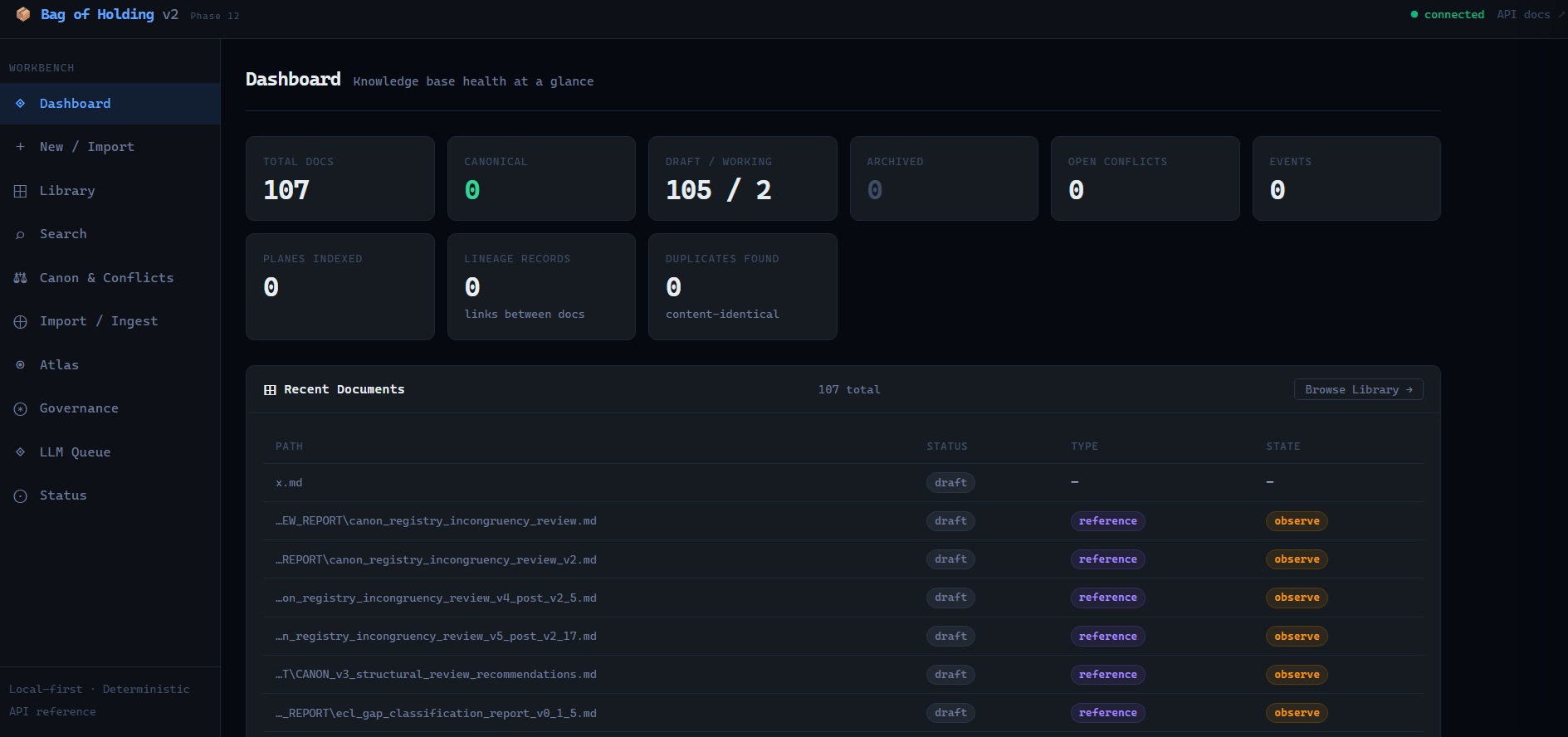
The through-line across Bag of Holding, Project Atlas, Reader, Dev Launchpad, and the robot and Metis prototypes is not simply “local apps.”
It is ownership.
Local-first matters because the operator can inspect the state, keep the artifact, and decide what crosses a boundary. That becomes more important as AI enters the workflow.
My current rule is simple:
Automate only after authority is visible.
That means:
- canonical documents are explicit, not assumed
- LLM output enters review queues, not final state
- local files remain owned by the user
- tool calls are logged and bounded
- project state is inspectable before it is exported or sent elsewhere
This is why Bag of Holding treats knowledge as a governed lifecycle, why Project Atlas keeps the daily work ledger local, and why Reader deliberately avoids network permission.
The pattern is clinical, too. In healthcare workflows, the dangerous failure is often not that no one acted. It is that no one can later tell which statement was authoritative, which handoff was current, or which decision changed the state.
So the software posture is the same as the workflow posture: preserve authority, preserve provenance, and make state visible before optimizing speed.
Comments – Addendum Notes
Sign in with GitHub to comment or reply. Comments live as GitHub Discussions on the site repo — no ppeck.me account needed.