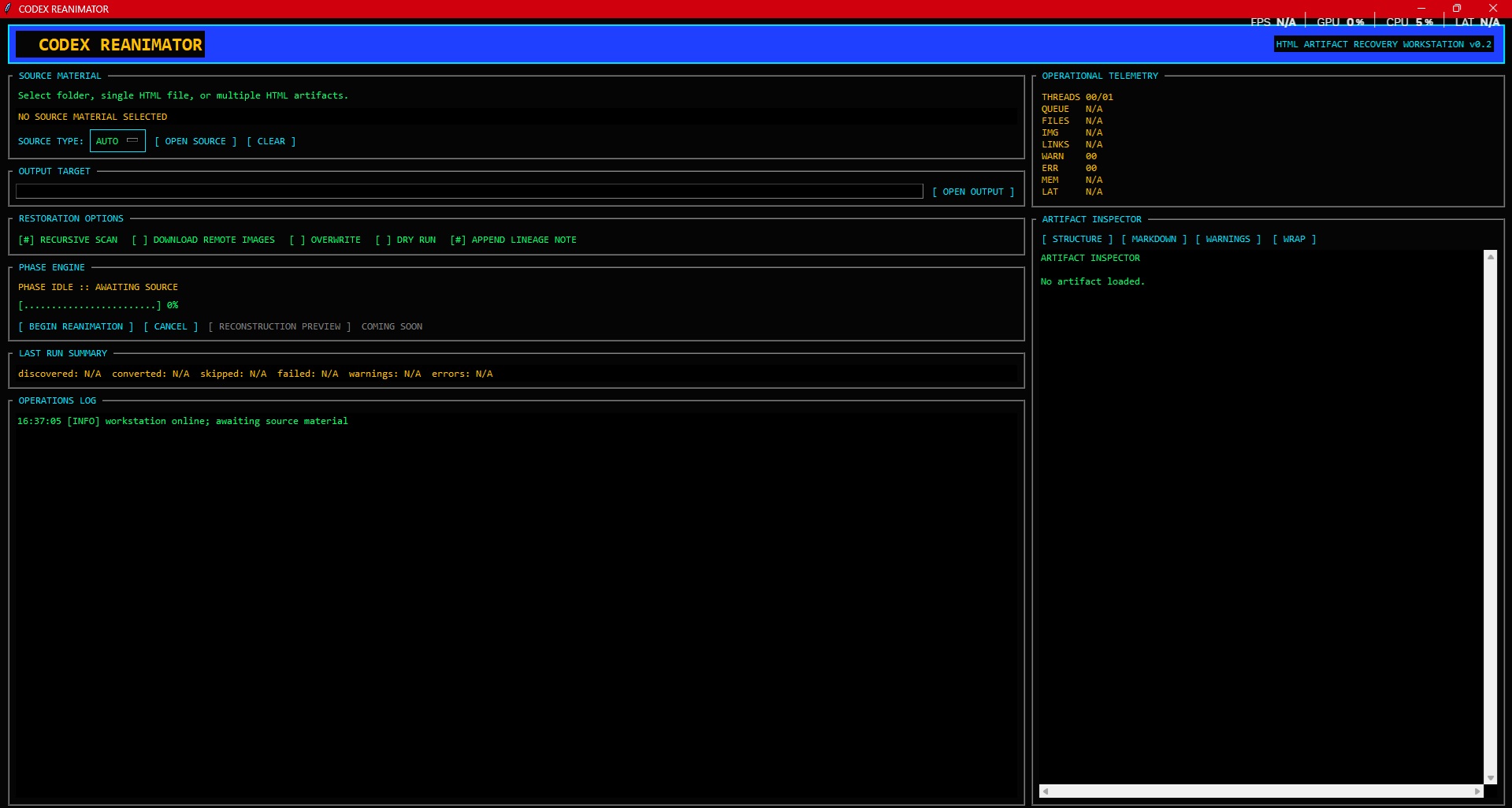
Most of my recent projects began as local tools.
That creates a portfolio problem: local tools are useful because they are specific, but public proof needs to be legible to someone who does not share the context.
The answer is not to inflate them into products. The answer is to show:
- what problem the tool solves
- what boundary it respects
- what screenshot proves the interface exists
- what the repo says is current
- what is intentionally out of scope
Codex Reanimator is a good example. It is not positioned as a universal publishing suite. It is a recovery workstation for messy HTML-to-Markdown conversion with provenance, assets, warnings, and manifests preserved.
Reader is similar. It is not a mobile IDE. It is a local-only text editor that refuses ads, accounts, analytics, cloud sync, and network permission.
That restraint is part of the signal.
Public proof should make the work inspectable without pretending it is more finished, more general, or more autonomous than it is.
Comments – Addendum Notes
Sign in with GitHub to comment or reply. Comments live as GitHub Discussions on the site repo — no ppeck.me account needed.