Project Atlas - Local-First Project Command Center
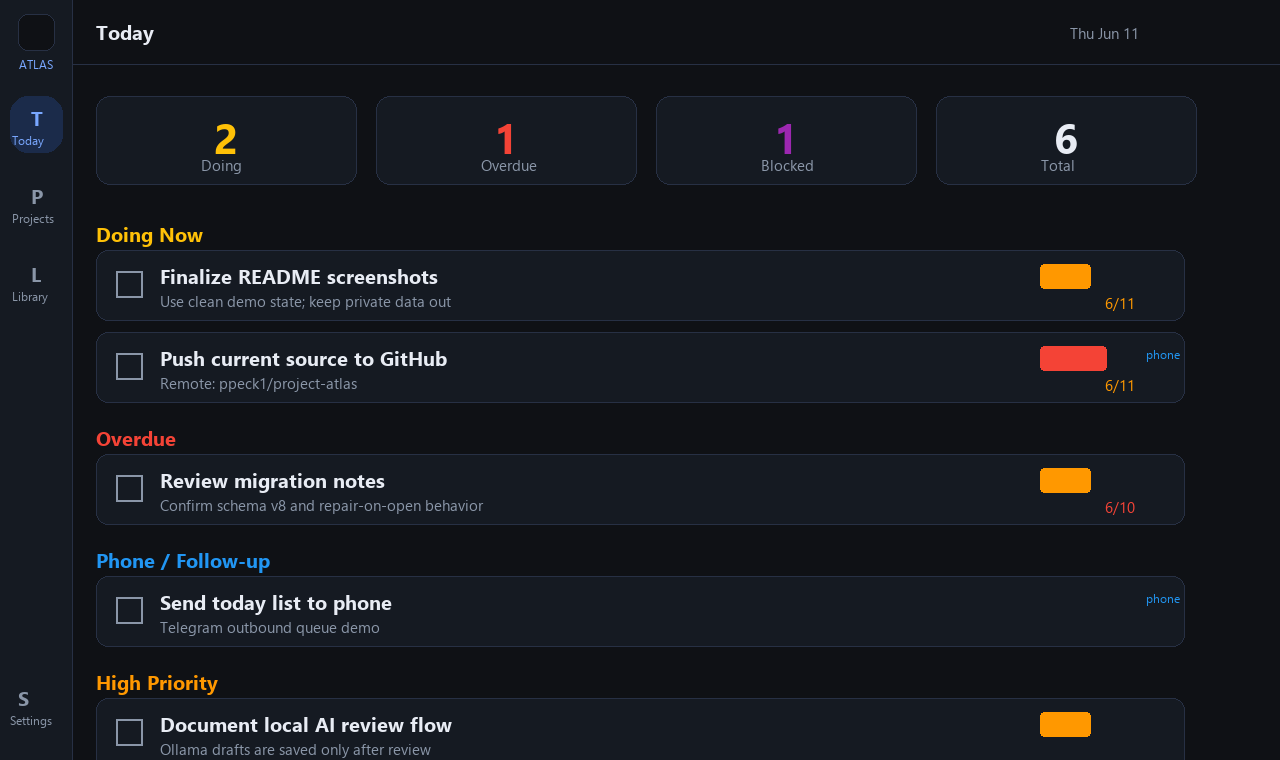
Project work scatters across notes, folders, terminals, and conversations. Project Atlas brings the accepted project state and the next justified action into one local Windows application.
What I built
The Flutter desktop app uses Drift and SQLite to keep a durable working record. Capsule holds accepted intent, decisions, risks, and evidence. Today and Workboard turn that record into an execution view. Projects, Sources & Health, and Library keep supporting material available without flattening it into one summary.
Human edits to accepted project truth retain revision history and reject stale saves. Agent-originated changes enter a proposal queue; they cannot silently become accepted state.
What the workflow makes visible
- What is accepted, what is proposed, and what has changed since the current view loaded.
- Which work is ready, blocked, stale, or waiting for a decision.
- Which local sources support a project and when they were last observed.
- Which optional integration is allowed to see or change which fields.
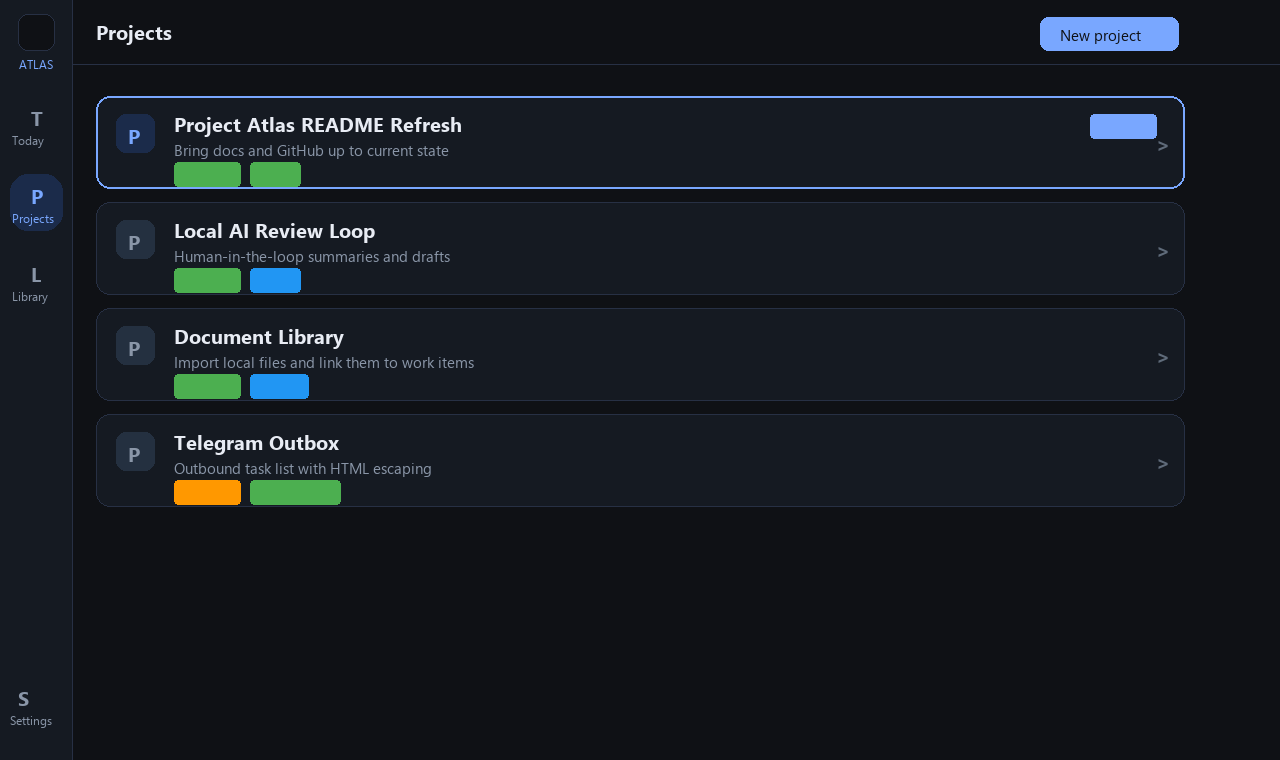
This retained portfolio capture shows an earlier project view. The current repository screenshots and capture manifest are the source for the latest interface and its public-safe demo evidence.
Data and integration boundaries
The database stays local. Explicitly enabled integrations can transmit selected data. The trusted local MCP surface is separate from a narrower remote projection with authentication, operator-approved aliases, and a small tool allowlist. Integration secrets use the Windows secret-storage boundary described in the repository.
Verification and limits
The repository includes migration, policy, adapter, service, and UI checks, Windows release builds, and a repository/release privacy audit. Current CI and the security policy record those boundaries.
This is a local desktop tool. Remote connector operation requires operator-managed configuration and authentication. Local-first storage does not make every optional integration offline or remove the need to protect the database.
What this demonstrates
Desktop product design, versioned local data, explicit evidence and review state, stale-write protection, and constrained integration surfaces.